
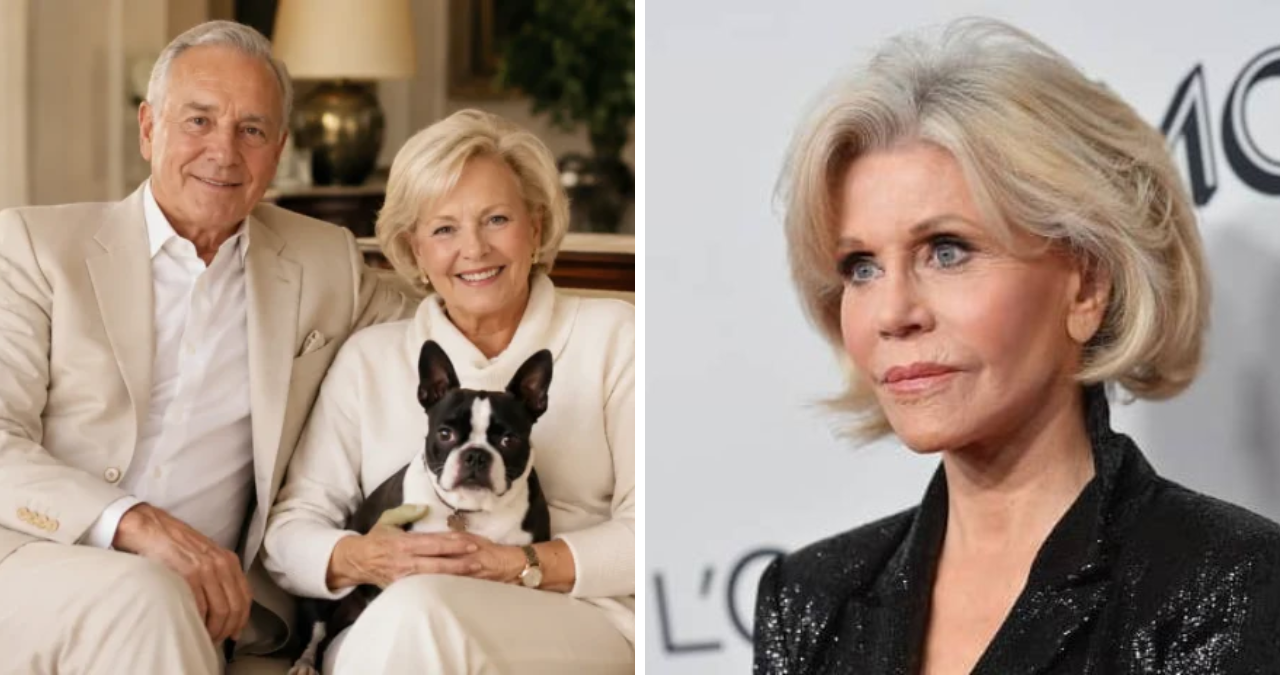

When you think of Ray Kroc, the founder of the McDonald’s empire, what comes to mind? Perhaps it’s the golden arches, the rapid expansion of a fast-food dynasty, or the famous film “The Founder” that chronicled his relentless pursuit of success. But behind every influential figure lies a personal story often overshadowed by their professional achievements. For Kroc, his marriages were as complex as his business dealings. While much has been written about his first wife, Ethel Fleming, who stood by him for nearly four decades, and his third wife, Joan Kroc, who became a legendary philanthropist, there is a woman whose story has largely remained in the shadows. That woman is Jane Dobbins Green.
This article aims to shed light on the life of this elusive figure. While she is often introduced merely as “Ray Kroc’s second wife,” her life was far richer and more complicated than that simple label suggests. From her quiet beginnings to her time working in the heart of Hollywood, her short marriage to the fast-food tycoon, and her dignified decision to walk away from it all, the story of Jane Dobbins Green is one of grace, resilience, and the quiet pursuit of privacy in an increasingly public world. For those who have ever wondered about the woman who was briefly Mrs. Ray Kroc, this exploration will offer a comprehensive and engaging look at her life and legacy.
From Walla Walla to the Heart of Hollywood
The story of Jane Dobbins Green begins not under the bright lights of Los Angeles but in the quiet, unassuming town of Walla Walla, Washington. Born on November 22, 1911, her full name was Jane E. Dobbins, and she was the daughter of Warren David Dobbins and Grace Myrtle Duncan. Her early years were not ones of privilege or fame. She experienced family hardship early on, including the divorce of her parents when she was quite young, and she had an infant sister, Eula Grace, who tragically passed away. These early experiences of loss and change may have instilled in her the quiet resilience and desire for stability that would later define her life.
Despite the lack of extensive public documentation about her upbringing, it is clear that Jane was ambitious and driven. She eventually made her way from the Pacific Northwest to the very heart of the American entertainment industry: Hollywood. During the Golden Age of cinema, she carved a niche for herself not as an actress seeking fame, but as a competent and trusted professional behind the scenes. Her most notable role was serving as the personal secretary to one of the biggest stars of the era, John Wayne. This was more than just a clerical job; it was a role that demanded absolute discretion, intelligence, and the ability to manage the complex logistics of a global celebrity’s life.
She was the gatekeeper, the confidante, the person who shielded “The Duke” from the relentless demands of the press and the public. This position placed her directly in the orbit of Hollywood’s elite, allowing her to navigate a world of high-powered personalities and complex social dynamics. In 1957, she was also working at the Criterion Restaurant in St. Paul, Minnesota, where she played the organ. It was a far cry from the Hollywood mansions, yet it was in this very setting that her path would cross with a man who was about to change the American culinary landscape, forever altering the course of her own life.
The Fateful Meeting with the Fast-Food Evangelist
The year 1957 marked a pivotal turning point in the life of Jane Dobbins Green. While she was playing the organ at the Criterion Restaurant in St. Paul, Minnesota, a man named Ray Kroc walked in. At that time, Ray was in his mid-50s, a driven and ambitious entrepreneur still in the midst of what would become his life’s greatest achievement: turning a small hamburger stand into a national phenomenon. He was still married to his first wife, Ethel Fleming, but the pressures of his all-consuming business ambitions were already taking a toll on their decades-long marriage.
Ray Kroc’s relationship with McDonald’s had begun a few years earlier. In 1954, he visited the original McDonald’s restaurant in San Bernardino, California, run by the McDonald brothers, Richard and Maurice. Envisioning a vast chain of such restaurants, he had set about franchising the concept on a massive scale. By 1957, the company was gaining momentum, and Kroc was a man on a mission, traveling constantly to new stores and franchise meetings. His life was a blur of business deals and relentless expansion. This was the world that Jane was stepping into.
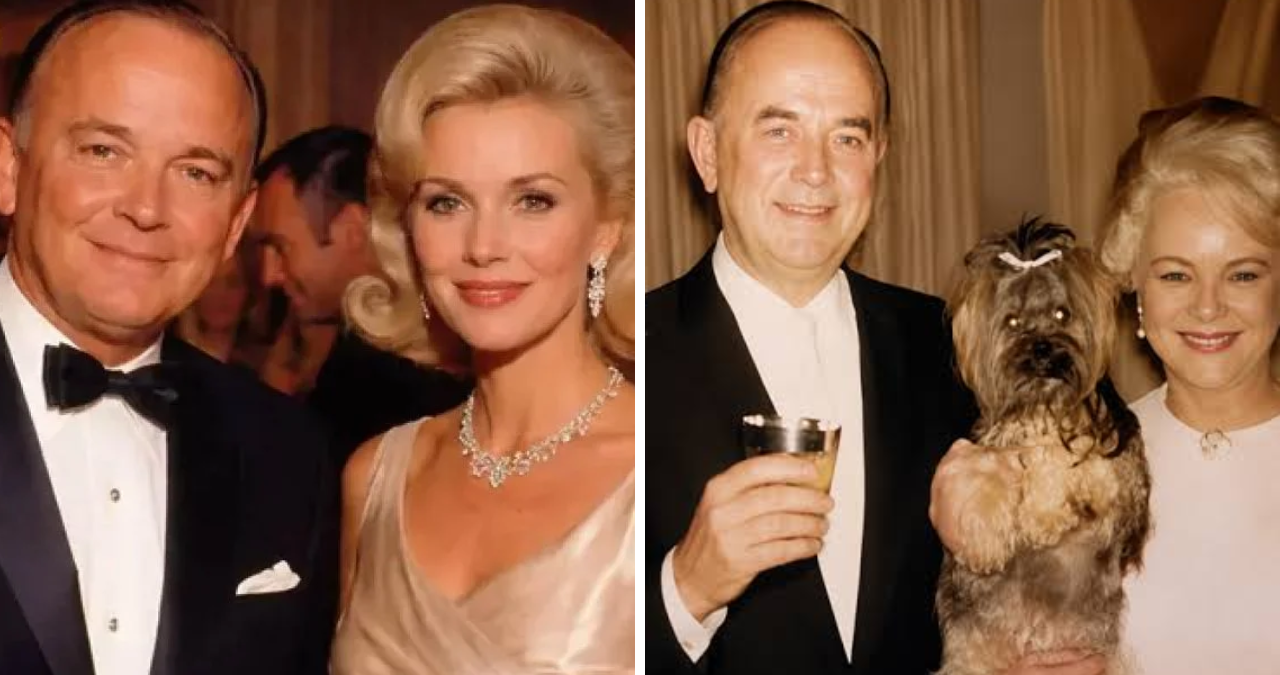
What exactly drew Ray Kroc to Jane Dobbins Green? History suggests it was a classic case of opposites attracting. Kroc was a force of nature, known for his aggressive business tactics, his volcanic temper, and his relentless energy. Jane, by contrast, was a serene and composed presence. She was a woman who had built a career on discretion and efficiency, a calming counterbalance to his frenetic personality. Her quiet dignity and self-sufficiency likely stood in stark contrast to the loud and ambitious personalities that surrounded Kroc in his business life. Their connection blossomed quietly, away from the public eye, leading to a significant decision for Kroc: the end of his nearly forty-year marriage to Ethel Fleming in 1961. Just two years later, in 1963, he and Jane Dobbins Green were married.
A Five-Year Marriage in the Shadow of the Golden Arches
On February 23, 1963, Jane Dobbins Green became the second wife of Ray Kroc. At the time of their marriage, the McDonald’s empire was on the cusp of explosive growth. The 1960s would see the company go public and its iconic golden arches become a symbol recognized around the world. Jane, however, was not a woman who craved the spotlight. She did not take on a public role within the McDonald’s Corporation, nor did she seek to leverage her husband’s fame for personal gain. Instead, she focused on providing a stable and private home life for a man who was essentially married to his work.
Her role was one of quiet support, a refuge from the relentless pace of the corporate world. Life as the wife of a man who lived and breathed his business was undoubtedly challenging. While Ray was building an empire, Jane worked to build a sanctuary. However, the marriage was not to last. Despite the public success, the private life of the Kroc household was strained. Just five years after they were wed, in 1968, the marriage of Ray Kroc and Jane Dobbins Green came to an end. The couple had no children together, which was perhaps a conscious choice given Ray’s single-minded focus on his empire.
The public reasons for their divorce were never thoroughly detailed, but the private reality was far more dramatic. Ray Kroc had met another woman years before, a woman named Joan Smith, who was married to one of his franchisees in South Dakota. Ray had been captivated by Joan from the moment he met her, and his pursuit of her was relentless, even while he was married to Jane. His undying infatuation with Joan ultimately created an impossible situation, and Jane was faced with a decision that would define her character. She chose to step aside. Rather than engage in a bitter, public fight, she walked away with her dignity intact, granting Ray a divorce and allowing him to marry Joan just a few months later in 1969.
The Triumph of a Quiet Life After the Spotlight
The divorce from Ray Kroc in 1968 was not the end of Jane Dobbins Green‘s story, but rather the beginning of a deliberate and successful second act. After stepping away from the drama and the headlines, she did what she did best: she retreated into the privacy she had always valued. She showed no interest in writing a tell-all book or seeking a financial settlement that would keep her in the public eye. She simply disappeared. While her ex-husband and his new wife, Joan, would go on to become one of America’s most famous power couples, Jane chose anonymity. She had seen the world of fame and fortune, and she had decided it was not for her.
For seventeen years, she lived a quiet life out of the spotlight. Then, in 1984, she found love again. She married a man named Paul D. Whitney, a man who shared her profound desire for a private, peaceful existence. This marriage was everything her first one was not. It was calm, stable, and a true partnership built on mutual respect away from the pressures of a business empire. She and Paul settled in Los Angeles, where they lived a simple, happy life. Their union was a testament to her resilience and her ability to find happiness on her own terms. It provided her with the grounded, fulfilling life she had always wanted, far from the shadow of her former husband.
Jane E. Dobbins Whitney, as she was then known, passed away quietly on August 7, 2000, at the age of 88. She died of natural causes, her departure from the world as calm and unassuming as her life had been. She was laid to rest at Westwood Memorial Park in Los Angeles. In a final act of quiet grace, she was buried not next to the fast-food titan who had made her famous, but beside her beloved second husband, Paul. It was a poignant statement about where her heart truly lay and a final assertion of the life she had chosen for herself.
Comparing the Lives of Ray Kroc’s Three Wives
To truly understand the unique position that Jane Dobbins Green occupies in the Ray Kroc narrative, it is helpful to see how her story compares to the other two women who were his wives. This table provides a clear comparison of their roles and legacies.
This comparison shows that Jane Dobbins Green was neither the long-suffering partner of the early years nor the celebrated final companion. She was the interlude, a chapter that reveals a different side of Ray Kroc and tells a powerful story of a woman who refused to be defined by a man’s ambition.
Lessons from a Life Lived on Her Own Terms
The story of Jane Dobbins Green offers several compelling lessons about resilience, self-worth, and the power of privacy. In an age where fame is often chased at any cost, her story stands out as a testament to the idea that there is value and strength in choosing anonymity. Here are some of the key takeaways from her life:
- The Strength of Quiet Dignity: In the face of a public and painful betrayal, Jane Dobbins Green chose not to create a public spectacle. Her silence was not a sign of weakness but a powerful statement of her character and self-respect.
- The Power of Reinvention: After her divorce, she didn’t cling to her former status. She stepped away from the spotlight entirely and rebuilt her life on her own terms, finding peace and happiness in a second marriage built on a shared desire for privacy.
- Privacy is a Choice: Jane serves as a reminder in our hyper-connected world that privacy is a precious commodity. She intentionally chose a quiet, unassuming life over the fleeting allure of fame.
- Defining Your Own Legacy: She is known primarily as “Ray Kroc’s second wife,” but her legacy is far more nuanced. She is a figure of quiet resilience, a woman who navigated immense personal challenges and found happiness in the simple life she created for herself, ultimately proving that her story was hers to write.
Table: Key Facts About Jane Dobbins Green
Conclusion
The life of Jane Dobbins Green is a fascinating and ultimately inspiring story. While her name will forever be linked to the McDonald’s founder Ray Kroc, her story is so much more than just a footnote in a business biography. It is the story of an independent woman from Washington who navigated the male-dominated worlds of Hollywood and big business with grace and professionalism. It is a story of a whirlwind romance and a short-lived marriage to a man possessed by an unyielding ambition. And it is a story of a courageous and dignified exit from a public life that she never wanted.
The history of Ray Kroc is often written through the lens of his business successes, but the story of Jane Dobbins Green reminds us that the personal lives of these titans are equally compelling. Her legacy is one of quiet resilience and self-preservation. She proved that one can be connected to immense wealth and fame and still choose a different path, a path of privacy, integrity, and personal happiness. In a world that often celebrates the loudest voices, Jane Dobbins Green stands as a testament to the enduring power of a quiet life, a life she walked away from the empire to live fully on her own terms.
FAQ
Who is Jane Dobbins Green?
Jane Dobbins Green is known for her personal background and public interest surrounding her life, family, and connections. Many people search for details about her biography and personal journey.
What is Jane Dobbins Green known for?
Jane Dobbins Green is primarily recognized for her personal life and the public curiosity surrounding her background, family, and notable associations.
Was Jane Dobbins Green married?
Yes, Jane Dobbins Green has been associated with a notable marriage, which has contributed to public interest in her life story.
What is known about Jane Dobbins Green’s family?
Information about Jane Dobbins Green’s family is limited, but available sources highlight aspects of her personal background and relationships.
Why is Jane Dobbins Green searched online?
People frequently search for Jane Dobbins Green to learn more about her biography, family, marriage, personal life, and other interesting facts.