
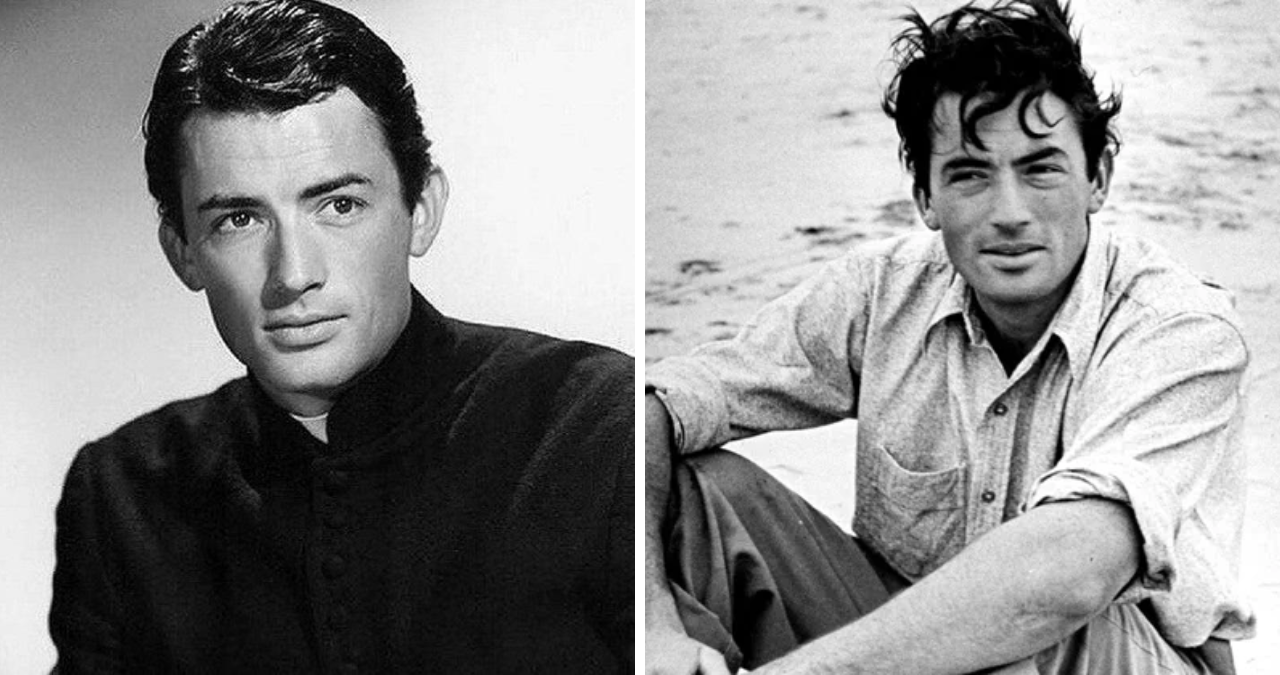

Gregory Peck young represented a fascinating paradox in American cinema—an actor whose towering physical presence and classic matinee-idol looks were matched by an uncommon depth and moral seriousness. When audiences think of Gregory Peck, they often picture the dignified Atticus Finch walking out of the courtroom or the romantic Joe Bradley whisking Audrey Hepburn through Rome in Roman Holiday. But the story of the man behind those iconic roles begins long before the fame and the Oscar statuettes. Understanding the journey of Gregory Peck young, from a lonely childhood to the precipice of stardom, reveals how this legendary actor was shaped into the embodiment of integrity that captivated generations.
The life of Gregory Peck young is a blueprint for how talent, determination, and a bit of luck can forge an enduring legacy. Born Eldred Gregory Peck on April 5, 1916, in La Jolla, California, his early years were far from the glamour of Hollywood he would come to define. To truly appreciate the actor who would become a symbol of American decency, one must look at the man he was before he graced the silver screen—a pre-med student who fell in love with the stage, a struggling New York actor who slept in Central Park, and a young man who instinctively understood that true charisma came from authenticity. This exploration of Gregory Peck young uncovers the foundation of a cinematic giant, providing insight into how a young man from California transformed into a cinematic icon of rare substance.
The story of Gregory Peck young is not just a tale of Hollywood success; it is a chronicle of personal evolution. His journey is replete with pivotal moments, from his early days at the University of California, Berkeley, where he discovered his passion for acting, to his grueling yet transformative training at the Neighborhood Playhouse in New York. It was during these formative years that Peck honed the skills and developed the persona that would make him one of the most respected actors in history. Exploring the life of Gregory Peck young helps us understand the origins of his signature on-screen integrity and his lasting impact on film and culture.
La Jolla Roots and a Fractured Childhood
The man who would become a symbol of stability and paternal warmth actually experienced a fractured and sometimes lonely childhood. Gregory Peck young was born into a world that would soon be marked by significant upheaval. His father, Gregory Pearl Peck, was a chemist and pharmacist, while his mother, Bernice Mae Ayres, was a Missouri native who converted to Catholicism. The marriage was troubled, and it would prove to be a short-lived one. When young Gregory was only five years old, his parents divorced, an event that profoundly affected his early life and development . This sense of being uprooted from a conventional family structure is a key element in understanding the emotional depth Gregory Peck young brought to his later roles, particularly as the fatherly Atticus Finch.
Following the divorce, Gregory Peck young was primarily sent to live with his maternal grandmother, Kate Ayres. This arrangement, while providing a sense of stability, underscored the fractured nature of his family life . His mother moved to St. Louis, and his father worked long hours, leaving the young boy often feeling like an outsider in his own family. As an only child, he often found solace in the company of his dog and the weekly trips to the movies with his grandmother, which likely planted the first seeds of his cinematic destiny . This element of searching for connection and stability is a recurring theme when examining the psychology of Gregory Peck young, one that would later inform his ability to project a sense of quiet authority and compassion.
The life of Gregory Peck young took another turn when he was sent to St. John’s Catholic Military Academy in Los Angeles at the age of ten. This was a formative experience that instilled in him a sense of discipline and structure that was otherwise missing from his upbringing . It was a strict environment, but Peck flourished, learning to command respect and developing a personal code of honor. This experience at military school contributed significantly to the erect posture and commanding presence that would become hallmarks of the Gregory Peck young persona and his later film career . It also provided a contrast to the emotional turmoil of his home life, offering a regimented and predictable world where he could excel and find a sense of belonging.
After his stint at the military academy, Gregory Peck young returned to live with his father and attended San Diego High School. This period marked a return to a somewhat more conventional adolescent life, though his relationship with his father remained complex. His father, a pharmacist, was a firm presence who had strong opinions about his son’s future, particularly his desire for Gregory to pursue a stable profession . The pressure from his father to avoid the instability of a theatrical career is a crucial factor in the story of Gregory Peck young, as it created a conflict between familial expectation and personal passion. Ultimately, the young man’s innate talent and calling would prove too strong to ignore, but the tension of this period added another layer of depth to his character.
The Berkeley Awakening: Discovering the Stage
Perhaps the most pivotal chapter in the story of Gregory Peck young began not in Hollywood, but in the lecture halls and theaters of the University of California, Berkeley. Initially, he enrolled in a pre-med program, dutifully following his father’s wishes for a secure and respected career . For a time, it seemed that the path of a physician was set for him. However, fate had other plans. The conventional narrative of Gregory Peck young shifts dramatically when, during his senior year, he was approached by the director of the campus theater. The director needed a tall actor to play the role of Starbuck in an adaptation of Herman Melville’s Moby Dick, and Peck’s 6’2” frame made him a perfect choice .
This single event proved to be a revelation for Gregory Peck young. He immediately fell in love with the collaborative nature of theater and the art of storytelling . The stage provided an outlet for his emotions and an opportunity to explore different facets of humanity, a pursuit far more fulfilling than the prospect of medical school. He appeared in five plays during his senior year, and the acting bug bit hard. The experience was described by Peck himself as a transformative period, saying that Berkeley “woke me up and made me a human being” . This awakening of Gregory Peck young to his true calling is a powerful reminder of how life can take unexpected and beautiful turns when one follows a passion.
For Gregory Peck young, the shift from pre-med to English and theater was not just an academic change; it was a philosophical and personal revolution. He found a community in the theater that he had been lacking in his childhood. The communal, almost familial aspects of the drama department gave him a sense of belonging and purpose. This discovery was the moment when Gregory Peck young began to shed his initial shyness and embrace the charisma that would later captivate audiences worldwide. It was a courageous move, especially considering the era and his father’s expectations, but it speaks to the inner conviction that would define his character both on and off-screen.
By the time he graduated from Berkeley in 1939, the transformation of Gregory Peck young was complete. He was no longer the uncertain pre-med student but a young man with a clear, if daunting, goal: to conquer the New York stage. It was at this point he made the symbolic break with his past by dropping his first name, “Eldred,” a name he never particularly liked . He simply became Gregory Peck, ready to embark on a new chapter. Armed with a degree and a burning ambition, he packed his bags and headed east with just one hundred and sixty dollars in his pocket, leaving behind the West Coast and his old life for good . This act of self-determination was the first step in Gregory Peck young’s journey toward stardom.
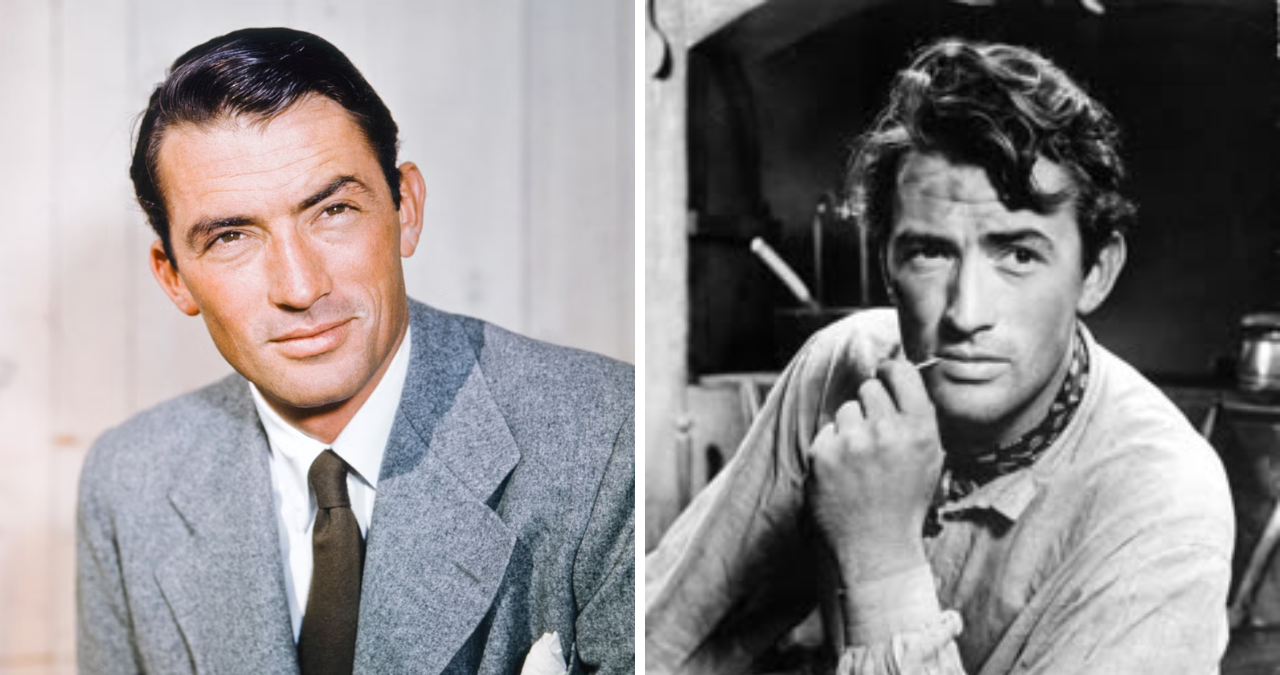
Conquering New York: The Neighborhood Playhouse
Arriving in New York City in 1939, the life of Gregory Peck young was anything but glamorous. He was just another aspiring actor in a city teeming with them, and the struggle was immediate and intense. He had a dream but little money, and the reality of the Big Apple was harsh. To survive, Gregory Peck young took on a series of odd jobs that tested his resolve and shaped his character. He worked as a barker at the 1939 World’s Fair, a tour guide at Radio City Music Hall, and even found himself sleeping on benches in Central Park when funds ran out . These experiences of poverty and uncertainty would stay with him, making him a deeply empathetic performer who understood the struggles of ordinary people .
Despite these hardships, Gregory Peck young had a plan. He had won a scholarship to study at the prestigious Neighborhood Playhouse, one of the most respected acting schools in the country . This was a turning point, as it was here that he received the formal training that would transform him from a promising amateur into a professional. Under the tutelage of the legendary Sanford Meisner, Gregory Peck young learned the craft of acting, developing the techniques of emotional recall and instinctive performance that would become the bedrock of his method . The rigorous training at the Neighborhood Playhouse was the crucible in which the skills of Gregory Peck young were forged, giving him the tools to create the nuanced and powerful characters audiences would later adore.
An unexpected but critical part of his training at the Neighborhood Playhouse involved lessons in movement with the renowned modern dancer Martha Graham . This physical training was essential for an actor as tall as Peck, as it helped him become more aware of his body and how to use it effectively on stage. Ironically, this dance training also led to a back injury—an injury that would later exempt him from military service during World War II . While he would spend the rest of his life downplaying the story of a “dance injury” as too “unmanly” for his Hollywood image, it was this movement training that added a subtle grace to his physicality. The Gregory Peck young who emerged from the Playhouse was not just a handsome face but a master of his instrument.
The hard work of Gregory Peck young finally began to pay off. In 1942, he made his Broadway debut in Emlyn Williams’ play “The Morning Star” . Although the play itself was not a commercial success, Peck’s performance was critically acclaimed. He followed this with another Broadway appearance in “The Willow and I,” which also had a short run. However, the critics consistently praised the tall, handsome newcomer with the resonant voice. It was becoming clear to everyone in the theater world that Gregory Peck young was a star on the rise. His stage work brought him to the attention of Hollywood scouts, and it was not long before the call came from the West Coast, marking the end of his early struggles and the beginning of a legendary film career.
The Young Man in Hollywood: A Star is Born
When Gregory Peck young arrived in Hollywood, the transition from stage actor to film star was swift and decisive. He was immediately signed to a contract, and by 1944, he had made his film debut in the RKO production “Days of Glory” . The film was about Russian guerrilla fighters, and though it was a modest production, it marked the official start of his cinematic journey. The following year, 1944, was a banner year for Gregory Peck young, as he achieved instant stardom with his second film, “The Keys of the Kingdom” . In this film, he played Father Francis Chisholm, a compassionate and determined Catholic missionary priest in China. The performance was a revelation; Gregory Peck young was not just a movie star but a serious actor of considerable depth.
This role earned him his first Academy Award nomination for Best Actor, a stunning achievement for a newcomer . Suddenly, the name of Gregory Peck young was on everyone’s lips. Hollywood had found a new leading man who could carry a film with his intelligence and grace, not just his looks. His personal life also took shape during this period, as he married his first wife, Greta Kukkonen, a Finnish-born woman, in 1942 . The couple would have three sons together: Jonathan, Stephen, and Carey. The story of Gregory Peck young began to intertwine with the golden age of Hollywood, and he was poised to become one of its most enduring figures.
The career of Gregory Peck young blossomed with a series of successful films that showcased his versatility. He followed The Keys of the Kingdom with a leading role in Alfred Hitchcock’s psychological thriller Spellbound (1945), demonstrating his ability to play a troubled and complex character . That same year, he appeared in The Valley of Decision opposite Greer Garson, solidifying his status as a romantic lead. His filmography from this period is a testament to his ambition and his desire to avoid being typecast. Gregory Peck young was not content to be merely a handsome face; he was determined to be a great actor, challenging himself with roles that explored the human condition .
The latter half of the 1940s only added to his acclaim and popularity. He received a second Academy Award nomination for his powerful role in the anti-racist drama Gentleman’s Agreement (1947) . A third nomination followed for the war film Twelve O’Clock High (1949), where he gave a searing performance as a stressed and deeply human Air Force commander. The story of Gregory Peck young in Hollywood is one of meteoric rise, but it was a rise built on talent, hard work, and a relentless pursuit of artistic excellence. By the time he reached his early thirties, he was already an institution, a symbol of the principled man in a chaotic world, a reputation that would only be solidified by his work in the decades to come.
The Roles That Defined a Generation
While the early career of Gregory Peck young established him as a major talent, it was the roles he took on as he matured that cemented his legacy. The qualities that made him a star—his integrity, his decency, and his quiet strength—were on full display. In 1953, he starred opposite a then-unknown Audrey Hepburn in Roman Holiday, a film that remains a classic of romantic comedy . Here, Gregory Peck young, now in his late thirties, played a cynical American journalist who finds his heart softened by a princess escaping her royal duties. The film was a massive hit and introduced Hepburn to the world, but it also showed the more playful, charming side of Gregory Peck young, a side that audiences adored.
However, the role that would define Gregory Peck young more than any other came nearly a decade later. In 1962, at the age of 46, he stepped into the shoes of Atticus Finch in To Kill a Mockingbird, a performance that would earn him his only competitive Academy Award for Best Actor . In many ways, Gregory Peck young had been preparing for this role his entire life. The character of the principled, humble, and courageous lawyer who defends a black man falsely accused of rape in the Depression-era South resonated deeply with audiences and critics alike. The character embodied the ideals that Peck himself had always strived for both on and off-screen. The American Film Institute later named Atticus Finch the greatest movie hero of the 20th century, a testament to the indelible mark Gregory Peck young left on cinema.
His performance as Atticus Finch was the culmination of everything the audience had seen in Gregory Peck young throughout his career. He was the compassionate priest in The Keys of the Kingdom, the man who fought prejudice in Gentleman’s Agreement, and the determined naval officer in Captain Horatio Hornblower. All of these roles built up to Finch, a character who was the living embodiment of moral courage. It is a testament to the genuine character of Gregory Peck young that he made the role so believable. For many, there was no distinction between the actor and the character; both were beacons of integrity. This was the ultimate expression of Gregory Peck young’s impact on the culture—he had become a national conscience.
Even after this career-defining role, Gregory Peck young continued to work steadily, taking on projects that interested him. He showed a different side in darker films, such as the original Cape Fear in 1962 and Captain Newman, M.D. in 1963. In the 1970s, he produced films and appeared in the horror classic The Omen . In 1991, he starred in Martin Scorsese’s remake of Cape Fear, playing a character vastly different from his classic roles. But throughout his career, the shadow of Atticus Finch loomed large, a symbol of all that was good about the man. The story of Gregory Peck young is ultimately a story of a man who grew to embody the finest qualities of his nation, using his fame to advocate for civil rights, anti-war protests, and liberal causes .
The Personal Journey and Legacy of Gregory Peck Young
Beyond the silver screen, the personal life of Gregory Peck young was as complex and interesting as any of his film roles. His first marriage to Greta Kukkonen ended in divorce in 1955, after which he married Veronique Passani, a French journalist, to whom he remained married until his death . He had five children, though his eldest son, Jonathan, tragically died of a self-inflicted gunshot wound in 1975 . This personal tragedy was a deep sorrow for the actor and his family. Yet, even in the face of such grief, Gregory Peck young maintained the stoic and dignified demeanor that had become his trademark, showing immense resilience and strength.
Throughout his life, Gregory Peck young remained fiercely dedicated to his principles. He was a lifelong Democrat and used his platform as a prominent actor to support various liberal causes. He was a supporter of civil rights and stood against the Vietnam War, although he had immense pride in his son Stephen, who served in the Marine Corps during that conflict . This ability to separate his personal feelings from his familial loyalty is a nuance often overlooked when discussing the public figure of Gregory Peck young. It reveals a man of deep conviction, who could distinguish between his political beliefs and his love for his family.
The legacy of Gregory Peck young extends far beyond his films. He was a founding member of the American Film Institute and served three terms as the president of the Academy of Motion Picture Arts and Sciences . He was a recipient of the Presidential Medal of Freedom, the nation’s highest civilian award, and the Jean Hersholt Humanitarian Award. The power of Gregory Peck young was not just in his acting but in his service to the community. He was an elder statesman of Hollywood, a figure of immense respect who was consulted on matters of great importance in the film industry. He embodied the ideal of using one’s influence for the greater good.
When Gregory Peck passed away in his sleep from natural causes on June 12, 2003, at the age of 87, the world mourned a true icon . He was eulogized not just as a great actor, but as a great man. The story of Gregory Peck young is a testament to the enduring power of character. In an industry often associated with vanity and superficiality, he stood as a beacon of integrity. He taught us that true heroism is quiet, principled, and often performed without fanfare. The image of Gregory Peck young, whether as Atticus Finch in a courtroom or as a young man struggling in New York, remains a powerful symbol of what it means to be a decent human being.
As we reflect on the life and career of Gregory Peck young, it’s clear that his impact on our culture is both profound and lasting. His performances continue to resonate with audiences because they tap into something universal and noble. The man who began as a lonely, divorced child in La Jolla grew up to become the moral compass of a generation. The cinematic world of Gregory Peck young is one where justice prevails, where the innocent are protected, and where goodness is a strength, not a weakness. It is a world we continue to need.
The Iconic Filmography of a Young Star
| Film Title | Year | Role of Gregory Peck Young | Significance in His Career |
|---|---|---|---|
| Days of Glory | 1944 | Vladimir | His film debut, establishing his screen presence. |
| The Keys of the Kingdom | 1944 | Father Francis Chisholm | First Academy Award nomination, launched him to stardom . |
| Spellbound | 1945 | John Ballantyne | Showcased his versatility in an Alfred Hitchcock thriller. |
| Gentleman’s Agreement | 1947 | Philip Schuyler Green | Second Oscar nomination; tackled social issues of anti-Semitism . |
| Twelve O’Clock High | 1949 | Brig. Gen. Frank Savage | Powerful performance in a war drama, earning another Oscar nomination. |
| Roman Holiday | 1953 | Joe Bradley | Iconic romantic comedy; a significant box office success . |
| To Kill a Mockingbird | 1962 | Atticus Finch | Won the Academy Award; defined his legacy as a moral icon . |
Conclusion
The journey of Gregory Peck young is more than a Hollywood biography; it is a compelling narrative of resilience, discovery, and the relentless pursuit of artistic truth. From his fractured childhood in California to the bright lights of Broadway and the glamour of Hollywood, his story reminds us that true icons are built on a foundation of character as much as talent. The experiences of Gregory Peck young, from his pre-med days to his training under the great Sanford Meisner, each contributed to the singular actor and man he would become. He proves that it is possible to achieve fame without sacrificing one’s principles, to be both a star and a humanitarian.
His legacy is a shining example of how the choices made during our formative years can shape our entire lives. The discipline he learned in military school, the passion he discovered in the Berkeley theater, and the grit he developed while struggling in New York all coalesced to create a man of extraordinary depth. Gregory Peck young taught us that the most powerful heroes are often the quietest, those who lead by example and inspire through action. The roles he chose, particularly Atticus Finch, were not just performances; they were extensions of his core beliefs.
Ultimately, the story of Gregory Peck young is a timeless narrative about what it means to be a good person in a complex world. It is a legacy that continues to inspire actors and audiences alike to seek out truth and justice. In every frame of film he graced, we see not just a handsome face, but the soul of a man who understood that with great power comes great responsibility. His work, his advocacy, and his life are a testament to the power of the human spirit. Gregory Peck young may have started as a boy who loved going to the movies with his grandmother, but he ended as one of the most beloved figures in American history.
FAQ
What was Gregory Peck like when he was young?
Gregory Peck was known for his tall stature, calm personality, and natural charisma. His early years helped shape the confident actor who later became a Hollywood legend.
How did Gregory Peck start his acting career?
Gregory Peck began acting in theater before moving to films. His strong performances quickly earned him leading roles in Hollywood.
What are Gregory Peck’s most famous movies?
Some of Gregory Peck’s best-known films include To Kill a Mockingbird, Roman Holiday, The Guns of Navarone, and Cape Fear.
Why is Gregory Peck still remembered today?
Gregory Peck is remembered for his outstanding performances, timeless screen presence, and lasting influence on classic Hollywood cinema.
Where can I find Gregory Peck young photos?
You can find Gregory Peck young photos in classic film archives, entertainment magazines, museum collections, and reputable online photo galleries dedicated to Hollywood history.