


The entertainment world was shaken to its core in August 2022 when news broke about the tragic and sudden passing of a beloved Hollywood talent. The Anne Heche death sent shockwaves through the industry and among fans who had followed her remarkable journey through decades of memorable performances. This comprehensive retrospective aims to explore not just the circumstances surrounding this devastating event, but also the legacy of a woman who lived a life marked by extraordinary resilience, artistic brilliance, and an unwavering commitment to authenticity.
Anne Heche was more than just a talented actress; she was a cultural force who challenged conventions and broke barriers throughout her career. From her earliest days as a soap opera star to her breakthrough film roles in the late 1990s, Heche demonstrated a versatility that few performers could match. Her ability to transition seamlessly between dramatic and comedic roles, between independent films and big-budget productions, spoke to a rare talent that could not be contained by simple categorization.
When the Anne Heche death was confirmed by her representatives, the initial disbelief gave way to an outpouring of grief and remembrance from colleagues, friends, and fans worldwide. The circumstances of the accident were so sudden and violent that it seemed almost surreal to process. A woman who had survived so much personal turmoil and professional ups and downs met her end in such a tragic, unexpected manner, leaving many to grapple with the fragility of life itself.
The news of the Anne Heche death prompted countless tributes from across the entertainment industry, with fellow actors, directors, and industry professionals sharing memories of her kindness, professionalism, and infectious spirit. What emerged from these tributes was a picture of a woman who, despite facing tremendous personal challenges, maintained a generous heart and a genuine connection to those around her.
Understanding the Events Leading to the Anne Heche Death
The sequence of events that led to the Anne Heche death began on the morning of August 5, 2022, in the Mar Vista neighborhood of Los Angeles. What started as a seemingly ordinary day would quickly escalate into a tragedy that would capture national attention and leave a community in mourning.
According to reports from multiple verified sources, Heche was driving her blue Mini Cooper through the residential streets of Mar Vista when the first incident occurred. Video footage and witness accounts confirmed that she was involved in a minor collision at a Mar Vista apartment complex, crashing into a wall in a parking area . Rather than stopping to assess the damage or exchange information, Heche reportedly drove away from the scene as bystanders attempted to offer assistance.
This initial collision was merely the prelude to a far more catastrophic event. Shortly after leaving the apartment complex, Heche’s vehicle accelerated through residential streets, reaching speeds that witnesses described as dangerously high. Surveillance footage later obtained by authorities showed her Mini Cooper speeding down the 1700 block of South Walgrove Avenue, a quiet residential street near Palms Boulevard .
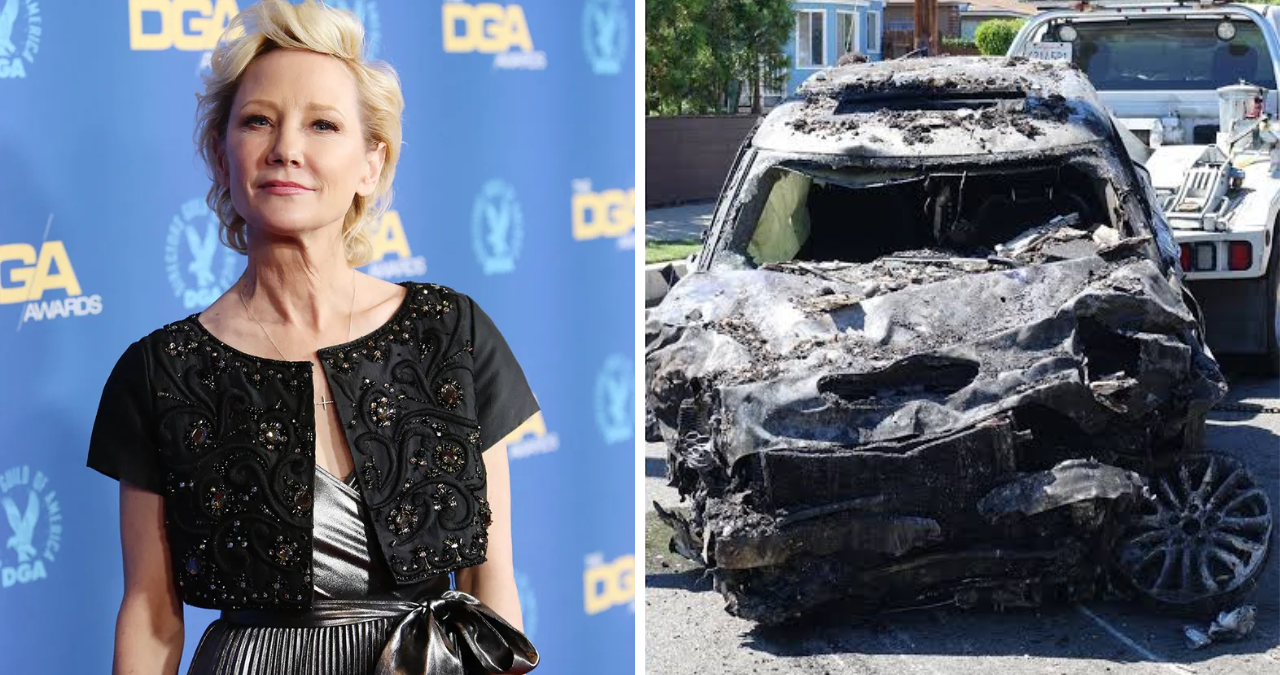
The Anne Heche death was ultimately the result of what happened next. Her Mini Cooper veered off the road and crashed into a two-story home in the 1700 block of South Walgrove Avenue. The impact was devastating, sending the vehicle completely into the home, causing structural compromise, and triggering a massive fire that would engulf both the car and the house .
What made the Anne Heche death particularly tragic was the time it took for rescuers to reach her. The Los Angeles Fire Department responded to the scene with substantial resources, deploying fifty-nine firefighters to battle the stubborn flames that had taken hold within the damaged structure. According to fire department records, it took approximately 65 minutes to access, confine, and fully extinguish the fire .
Radio recordings from the Los Angeles Fire Department provided a chilling timeline of the rescue efforts. First responders arrived at the scene at 11:01 a.m., with the initial dispatches indicating that someone was trapped inside the burning vehicle. However, confusion among firefighters about whether there was a person in the car that needed saving contributed to delays. At 11:18 a.m., one firefighter radioed that no one else was inside the burning home, but the driver was not immediately located. It wasn’t until 11:25 a.m. that a firefighter announced, “We have identified one patient, inaccessible at this time. He’s pushed up against the floorboard!”
The Anne Heche death was complicated by the fact that she had collapsed below the front seats of the vehicle, making her difficult to spot amid the flames and smoke . Firefighters used a heavy-duty tow truck to pull the car out of the inferno, with Heche still inside, and she was finally removed from the vehicle around 11:49 a.m. . By the time she was extricated, she had suffered severe burns and smoke inhalation injuries.
Medical Response and Final Days Following the Anne Heche Death
Following her rescue from the burning vehicle, Heche was rushed to the Ronald Reagan UCLA Medical Center emergency room in critical condition. She had suffered second and third-degree burns over a significant portion of her body, with the autopsy later revealing that 40 percent of her total body surface area had sustained burns . Additionally, she suffered from a sternal fracture due to blunt trauma, which would later be cited as a significant contributing factor to her death .
The Anne Heche death was ultimately the result of severe anoxic brain injury caused by the smoke inhalation and lack of oxygen during the fire. According to the autopsy report, the inhalation injuries caused the lack of oxygen that led to her anoxic brain injury, which is an injury due to the lack of oxygen rather than physical trauma . A CT scan of her brain showed “diffuse hypoxic injury with evidence of herniation” .
Heche was transferred from the UCLA emergency room to the Grossman Burn Center at West Hills Hospital and Medical Center for specialized burn care . Despite the best efforts of the medical team, Heche never regained consciousness after the accident. She remained in a coma, her condition so critical that her family and representatives began preparing for the worst.
On August 11, 2022, Heche was declared legally brain-dead under California law . The Anne Heche death was officially pronounced at that time, though her body was kept on life support for several additional days to facilitate organ donation, as had long been her wish. Her family issued a statement saying, “We have lost a bright light, a kind and most joyful soul, a loving mother, and a loyal friend” .
The Anne Heche death timeline continued as she was “peacefully” taken off life support on August 14, 2022, and organ donation procedures were completed . Her heart stopped beating on that day, and she was officially pronounced dead. She was 53 years old.
Her sons, Homer Laffoon and Atlas Heche Tupper, survived her. Homer later told the Los Angeles Times, “My brother Atlas and I lost our Mom. After six days of almost unbelievable emotional swings, I am left with a deep, wordless sadness. Hopefully my mom is free from pain and beginning to explore what I like to imagine as her eternal freedom” .
Official Findings and Autopsy Results
The Anne Heche death was the subject of a thorough investigation by the Los Angeles County Medical Examiner-Coroner’s Office, which released its final findings in December 2022, several months after the accident. The official autopsy report provided definitive answers about the cause and manner of death, while also addressing the toxicology questions that had generated significant public interest and speculation.
The official cause of the Anne Heche death was listed as “inhalation and thermal injuries” resulting from the fire that erupted after the crash . A sternal fracture due to blunt trauma was also listed as a contributing factor that significantly contributed to her death. The report noted that the sternal fracture made it extremely painful for her to breathe while she was trapped in the vehicle, further complicating oxygenation and ultimately contributing to her death . The manner of death was officially ruled an accident .
One of the most significant questions surrounding the Anne Heche death concerned potential impairment by drugs or alcohol at the time of the crash. The autopsy and toxicology results provided important clarifications on this matter. The report found that there was no evidence of impairment by illicit substances at the time of the crash .
Specifically, the toxicology testing revealed the presence of benzoylecgonine, an inactive metabolite of cocaine, in her system. However, the coroner’s office emphasized that the presence of this metabolite indicated past use of cocaine rather than active impairment at the time of the crash . The report noted that “therefore, there was no evidence of impairment by illicit substances at the time of the crash” .
The Anne Heche death investigation also addressed the presence of fentanyl in her system. The autopsy report confirmed that fentanyl was detected in her urine, but this was attributed to medications she received during treatment at the hospital after the crash. The report specified that the urine sample was taken “after she received treatment” for her injuries, and the presence of fentanyl was “consistent with therapeutic use” . There was no fentanyl detected in her blood stream when she arrived at the hospital, supporting the conclusion that it was administered after her arrival for pain management .
Cannabinoids were also detected in Heche’s urine, but not in her blood stream, which the coroner described as “consistent with prior use (of marijuana) but not at the time of injury” . No alcohol was found in her system despite an image captured just before the crash showing what appeared to be a bottle in her car’s front area .
The Life and Career Anne Heche Built
Understanding the Anne Heche death requires appreciating the remarkable life that preceded it. Heche was born on May 25, 1969, in Aurora, Ohio, the youngest of five children of Nancy and Donald Heche. Her childhood was marked by profound challenges, including her father’s unstable lifestyle and later death from AIDS-related complications in 1983, followed three months later by the death of her 18-year-old brother Nathan in a car crash .
Heche found her calling in acting early, beginning her professional career at the age of 18 on the NBC soap opera “Another World,” where she portrayed the dual roles of identical twins Vicky Hudson and Marley Love . Her work on the show earned her a Daytime Emmy Award for Outstanding Younger Actress in a Drama Series in 1991 .
The 1990s brought Heche to a wider audience through a series of notable film roles. Her breakthrough year came in 1997 when she appeared in “Donnie Brasco,” “Volcano,” and “Wag the Dog” . The Anne Heche death occurred long after these peak years, but her body of work continued to grow throughout the 2000s and 2010s.
Perhaps as significant as her professional accomplishments was Heche’s personal life, which at times generated considerable public interest. In 1997, she began a high-profile relationship with comedian Ellen DeGeneres, and the two became one of the first openly gay celebrity couples, a fact that garnered significant media attention and, at times, professional repercussions . The relationship ended in 2000, and Heche experienced a highly publicized psychotic break shortly afterward .
Heche candidly addressed her struggles in a 2001 memoir titled “Call Me Crazy,” in which she alleged extensive sexual abuse by her father . Despite these challenges, Heche continued to work steadily and earned critical acclaim for her performances in television series such as “Men in Trees,” “Hung,” and “The Brave,” as well as in films including “Cedar Rapids” and “My Friend Dahmer” .
The Legacy of Anne Heche Beyond Her Death
While the Anne Heche death marked the end of her physical presence in the world, her legacy continues through her substantial body of work, her advocacy for mental health awareness, and her role as a trailblazer for LGBTQ+ representation in entertainment. In the years since her passing, her contributions have been remembered and celebrated by fans and colleagues alike.
Heche was posthumously honored with a star on the Hollywood Walk of Fame in 2023, a recognition of her significant contributions to the entertainment industry . Her sons, Homer and Atlas, accepted the star on her behalf, a poignant moment that underscored the Anne Heche death’s impact on those who loved her most.
Heche left behind a final book, “Call Me Anne,” published posthumously in 2023. The book, described as a “sweet final word” from the actor, offers a gentle guide for living with purpose, love, and joy. In its pages, Heche emphasizes the importance of kindness and caring, writing, “Open yourself up to love and transform kindness from a feeling you extend to those around you to actions that you perform for them” . The book serves as a final testament to her spirit and her enduring commitment to spreading positivity despite the challenges she faced.
The Anne Heche death prompted renewed attention to her advocacy work, particularly around mental health awareness. Having spoken openly about her struggles with mental health following her 2001 breakdown, Heche helped destigmatize conversations about psychological well-being. Her willingness to share her experiences, even when they were painful or potentially damaging to her career, demonstrated a remarkable courage that continues to inspire others.
Navigating the Misinformation After the Anne Heche Death
In the wake of the Anne Heche death, as is often the case with high-profile tragedies, the internet became a breeding ground for misinformation and conspiracy theories. Among the most bizarre claims was the assertion that the “Epstein files” contained allegations that Ellen DeGeneres “ate” Heche, a conspiracy theory that gained traction on fringe websites before being debunked by fact-checkers .
The claims have been debunked multiple times. Nowhere in the files released under the Epstein Files Transparency Act does it mention that Ellen DeGeneres was a cannibal, nor is there any mention of her involvement in the Anne Heche death . Such outlandish claims distract from the genuine tragedy and the real circumstances of the accident.
The prevalence of such misinformation serves as a reminder of the importance of relying on verified sources and official investigations when seeking to understand tragic events. The Anne Heche death was the result of a tragic accident, as confirmed by the Los Angeles County Medical Examiner-Coroner’s Office, and the family has asked for privacy and respect in their grief.
Conclusion
The Anne Heche death represents a tragic chapter in Hollywood history, marking the end of a life filled with remarkable achievements, profound challenges, and unwavering resilience. From her early days as a soap opera star to her breakthrough film roles and her later work in television and independent films, Heche demonstrated a talent and versatility that earned her a place among Hollywood’s most respected performers.
The circumstances of the Anne Heche death—a fiery car crash in a quiet Los Angeles neighborhood—added an element of shock and tragedy to an already sad event. The subsequent investigation, which included a thorough autopsy and toxicology analysis, provided clarity about the cause and manner of death while dispelling rumors about impairment at the time of the crash.
Perhaps the most lasting legacy of the Anne Heche death is the reminder it provides about the fragility of life and the importance of cherishing the time we have. Heche lived a life marked by both triumph and tragedy, and she leaves behind a body of work that continues to entertain and inspire audiences around the world. Her story serves as a testament to the power of resilience in the face of adversity and the enduring importance of living authentically.
In remembering Anne Heche, we celebrate not just the circumstances of her death, but the life she lived—a life of creativity, courage, and compassion. The outpouring of love and remembrance that followed the Anne Heche death demonstrates the profound impact she had on those who knew her and the millions who appreciated her work.
FAQ
What was the cause of Anne Heche’s death?
Anne Heche died on August 11, 2022, after suffering a severe brain injury caused by complications from a car crash that occurred days earlier.
When did Anne Heche pass away?
Anne Heche passed away on August 11, 2022, following injuries sustained in a tragic vehicle accident on August 5, 2022.
How old was Anne Heche when she died?
Anne Heche was 53 years old at the time of her death.
What happened in Anne Heche’s car accident?
Anne Heche was involved in a high-speed crash in Los Angeles, where her vehicle struck a home and caught fire, leading to critical injuries.
Was Anne Heche declared brain dead?
Yes. After the accident, doctors determined that Anne Heche had suffered irreversible brain injury, and she was declared brain dead before being taken off life support.